5 Signs Your CBD Product Is Worth the Money (and 3 Red Flags to Walk Away From)
Most CBD on the shelf is overpriced filler. Here are five things a quality product proves about itself, three warning signs that should send you back out the door, and a quick in-store checklist.
The CBD aisle has gotten crowded, loud, and expensive. Tinctures, gummies, balms, capsules, every brand swearing it is the cleanest and the strongest. Most of it is filler riding a trend. A small slice is well made. The difference is not the packaging or the price tag, it is what the product can actually prove about itself.
The kicker is that the proof is usually free, public, and sitting one QR code away. People just never learn to read it. So here is how to tell the two apart before you spend a cent.
What a worthwhile product gets right
1. A current, batch-specific certificate of analysis. This is the single most important document in the entire category. A real Certificate of Analysis (COA) comes from an independent third-party lab and is tied to the exact batch number printed on your bottle. It lists the cannabinoid content, confirms the THC level is within legal limits, and screens for pesticides, heavy metals, residual solvents, and microbials. If a brand makes you hunt for it, that is a choice they made. Our full walkthrough on what to check on a CBD label digs into how to actually read one.
2. The label and the lab match. A bottle that claims 1000mg should test at roughly 1000mg. That sounds obvious until you see how often it fails.
When Johns Hopkins researchers tested 84 CBD products sold online for a study published in JAMA, about 70% were mislabeled for potency, with roughly equal numbers over and under their stated dose. Verification is not paranoia, it is the baseline.
When the COA confirms the milligrams on the front, you are paying for what you think you are buying. When nobody checks, the printed number is just a wish.
The contaminant panel deserves the same scrutiny as the potency number. Heavy metal action levels typically run in the range of 0.3 to 1.5 ppm depending on the metal and the state's program, and pesticide limits sit anywhere from 0.1 to 3.0 ppm depending on the compound. A 2022 analysis of 121 edible CBD products found lead in 42% of them and mercury in 37%, so a panel that skips heavy metals entirely is not a shortcut, it is a gap you are expected not to notice.
3. Clarity on full-spectrum, broad-spectrum, or isolate. A serious brand tells you exactly which one you are getting and why. Full-spectrum keeps the whole range of compounds including trace THC. Broad-spectrum strips the THC but keeps the supporting cannabinoids and terpenes. Isolate is pure CBD and nothing else. None is automatically better, but vagueness here usually means they are hoping you do not ask. If you want the difference laid out properly, we covered full-spectrum vs broad-spectrum in detail.
4. A short, honest ingredient list. Quality oil is usually CBD extract in a clean carrier like MCT or hemp seed oil, maybe a real terpene blend or natural flavoring. When the list runs long with mystery additives, sweeteners, and fillers, you are paying premium money for mostly not-CBD.
5. Real sourcing detail. Where was the hemp grown, and how was it extracted? Brands proud of their supply chain name the farm region and use clean methods like CO2 extraction. Hemp is a bioaccumulator, meaning it pulls contaminants out of the soil it grows in, so the growing conditions matter.
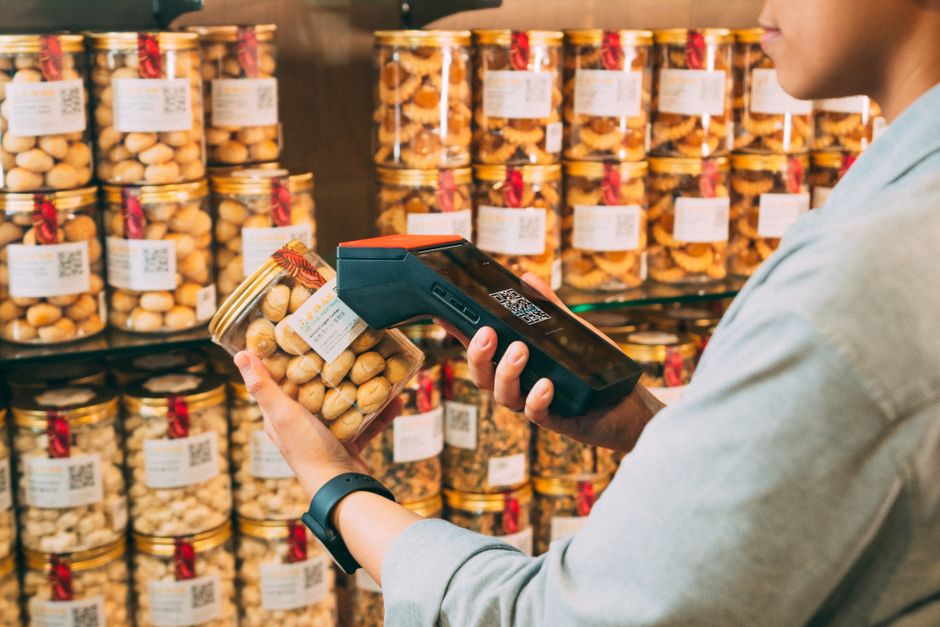 The proof is one scan away. Pull it up before you pay.
Three red flags to walk away from
1. Specific health claims. Any product promising to cure, treat, or fix a named condition is telling you it does not respect the rules, and probably not much else either. Legitimate brands describe their product, not a diagnosis. Bold medical promises are a marketing tell, not a quality signal.
2. No COA, an expired COA, or one that does not match your batch. This is the dealbreaker. A generic lab sheet that is two years old and tied to no batch number is theater. If you cannot verify what is in the bottle, the price is irrelevant, because you do not know what you are buying.
3. Prices that are impossibly cheap or absurdly high. Rock-bottom pricing usually means weak extract or none at all. Sky-high pricing often just means heavy branding markup. Real CBD made properly sits in a sane middle range. Anything at the extremes deserves a second look at that COA, and a hard look at the milligram numbers on the front, which mislead more people than anything else on the shelf.
The 60-second in-store check
Before you commit, run the bottle through this in order. It takes under a minute and kills almost every bad buy.
- Pull up the lab report on your phone, QR code or brand website.
- Match the batch number on the COA to the one on the bottle.
- Confirm the tested milligrams line up with the front-label claim.
- Check the COA actually lists a contaminant panel, not just potency.
- Read the ingredient list out loud. If it sounds like a chemistry exam, put it back.
- Know whether you want full-spectrum, broad-spectrum, or isolate before you walk in, so a confused label cannot upsell you.
The brands worth your money are the ones that make every one of those steps easy, because they already did the work and want you to see it. The ones hiding the paperwork are hiding it for a reason.
Quality is verifiable. If you cannot verify it, you are not buying CBD, you are buying a story.