The Landrace Purity Myth: Why No Strain You Smoke Is Actually 'Original'
Breeders and marketers sell 'pure landrace' like it is bottled history. The genetics say otherwise. Here is what landrace really means, why purity is a story, and how to read the claim without getting played.
There is a romance to the word landrace. It conjures untouched valleys, ancient genetics, a plant exactly as nature intended before breeders got their hands on it. Brands lean on that romance hard, stamping "pure landrace" on packaging the way wineries lean on terroir. The trouble is that a frozen, pristine, original strain mostly does not survive contact with how cannabis actually works — or with what the genome itself says when scientists go looking.
Let us pull the myth apart without throwing out what is valuable underneath it.
What a landrace actually is
A landrace is a population of cannabis that adapted to a specific region over many generations of local cultivation. Afghani lines in the Hindu Kush, Durban from South Africa, Thai from Southeast Asia, Acapulco from Mexico. These plants were shaped by two forces at once: the environment they grew in, and the farmers who saved seed from the plants they liked best.
That second force matters more than the marketing admits. A landrace is not wild cannabis. It is a regionally adapted, human-selected population. Farmers were choosing for yield, potency, ripening time, and resilience for centuries. Selection is breeding — slow, local, unwritten breeding, but breeding all the same. The "untouched" landrace was being shaped by human hands the entire time. Nobody was keeping notes, but the selection pressure was relentless.
So the picture is not nature versus the breeder. It is one long, unbroken line of breeding that started thousands of years ago and never stopped.
Why "pure" is the wrong frame
Cannabis is wind-pollinated and shamelessly promiscuous. Pollen travels for miles and does not ask permission. A landrace population was never a single fixed genotype — it was a wide, variable gene pool with real internal difference between individual plants. Two seeds from the same Afghani valley could grow into noticeably different plants: one shorter and resin-caked, the next taller with a sharper nose. That variability is the defining feature of a landrace, not a defect in it.
This is exactly why "pure" is the wrong word. Pure implies uniformity, and uniformity is the one thing landraces never had. A consistent, predictable plant is the product of deliberate stabilization work — breeders typically need five to eight generations of selfing or backcrossing, often stretched over 4-6 years, before a trait shows up reliably in every seed. That is the opposite of leaving genetics untouched. The moment you make a landrace breed true, you have started modifying it. Purity and originality are pulling in opposite directions, and most "pure landrace" marketing wants you to believe they are the same thing.
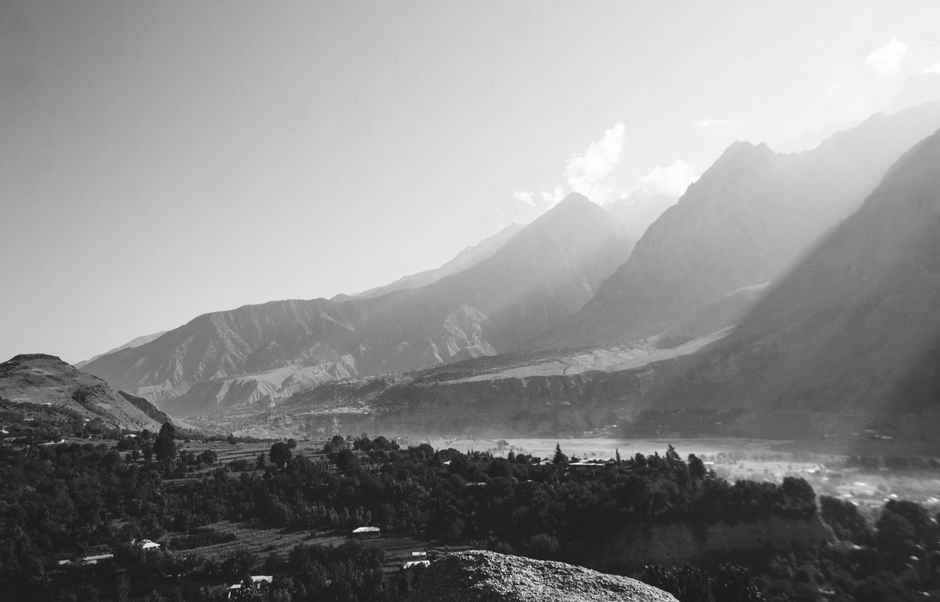 A landrace was never one fixed plant. It was a whole valley's worth of variation, shaped by climate and by farmers saving their favorite seed.
What the genome actually shows
Here is where the science quietly demolishes the romance. When researchers sequenced cannabis at scale to reconstruct its history, the family tree did not look like a set of clean, isolated branches. It looked like a tangle.
A landmark 2021 study in Science Advances analyzed more than a hundred genomes and traced domesticated cannabis back to a single domestication event in East Asia roughly 12,000 years ago, with the modern drug and hemp types splitting off much later. The pure ancestral "wild" cannabis those lineages came from is, in the authors' words, likely extinct. Follow-up work has kept finding the same thing: extensive admixture across the genus, meaning the branches have been swapping genes for a very long time.
Translation: the genome carries no record of a frozen, original strain. It records movement, mixing, and human selection running all the way down. The "original" you are being sold is not hiding in some valley waiting to be rediscovered. Genetically, it was already a mosaic before any of us showed up.
The modern supply problem
Now layer the last few decades on top of the deep history. Most of the classic landrace regions have been flooded with imported hybrid genetics. Growers there adopted high-yield commercial strains for the same reason growers everywhere do — they sell. Pollen from those hybrids drifted into the local populations, generation after generation. Large-scale hybridization of drug-type cannabis really took off from the 1960s onward, and it never slowed down.
The result is that genuine, geographically isolated, uncontaminated landrace stock is now rare and getting rarer. A lot of "pure landrace" seed sold today is, at best, a preservation breeder's careful reconstruction, and at worst a recent hybrid wearing an exotic place name. This is the same reason no strain you smoke is original in the way the labels imply — the whole catalog is hybrids of hybrids, and the "old" end of it is no exception.
How to read a landrace claim like an adult
When you see "pure landrace," do not argue with the word. Just ask the boring provenance questions, the same way you would interrogate any seed-pack term that sounds better than it means.
| Question to ask | What a good answer sounds like | Red flag |
|---|---|---|
| Where and when was the seed collected? | A named region and a rough date | "It's from the mountains" |
| Who maintained the line, and for how long? | A specific breeder, multiple documented generations | Silence, or a brand with no people attached |
| Is this a preservation project or a product? | Honest talk about variability and finish times | Promises of a uniform, easy crop |
| What will it actually do in the tent? | "Expect a range of phenotypes" | "Stable, consistent, beginner-friendly landrace" |
That last row is the quiet tell. Real landrace seed throws a spread of phenotypes — that is the whole point of it. A seller promising a tidy, uniform crop from "pure landrace" stock is describing a stabilized line, not a wild one, whether they realize it or not.
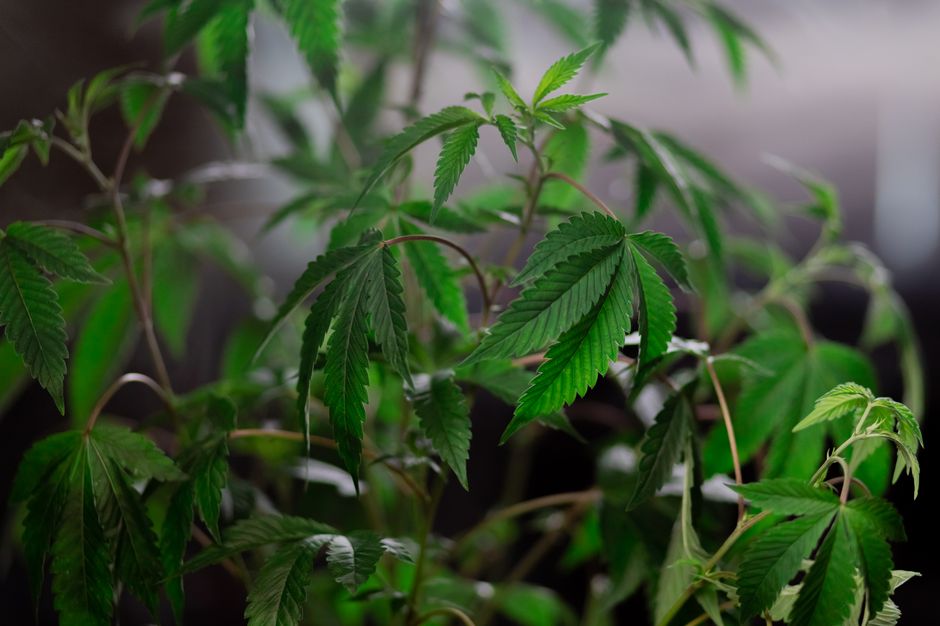 Pop real landrace seed and you get a spread, not a copy. Variability is the feature you paid for.
What landrace genetics are actually good for
None of this means landraces are worthless — far from it. Their real value is precisely the wild, unstabilized diversity that makes "purity" a myth in the first place.
- Terpene and cannabinoid expressions the modern catalog bred away in the race toward maximum THC. Sharp tropical notes, deep hash funk, raw petrol from old Afghani lines — flavors you simply will not find in the current cookie-and-gas gene pool.
- Hardy, region-adapted traits like mold resistance, drought tolerance, and specific photoperiod behavior, baked in by centuries of local survival.
- Raw material for hybrid vigor. Because landraces sit outside the crowded modern pool, crossing one into a tired hybrid is a true outcross, and the offspring often come up tougher and more surprising.
That last point is exactly why serious breeders keep reaching back into old genetics to build new gas. They are not buying the purity story. They are mining the diversity.
Treat a landrace as a gene bank, not a relic. A toolbox of rare traits is worth far more than an imaginary certificate of originality.
So the honest frame is this. Landraces were always being shaped by human hands. The genome shows mixing and selection running all the way down, with no pristine ancestor left to find. Real, intact landrace stock is now hard to source. And the value that survives all of that is the diversity, not the purity.
Respect the genetics for what they really are, and the word "pure" stops mattering. Provenance and a spread of wild phenotypes tell you everything the marketing label only pretends to.