
The Rise of Living Soil: Why Top Growers Are Ditching Bottled Nutrients in 2026
Living soil went mainstream with serious growers in 2026. Here is how the soil food web feeds the plant, why the bottles are coming off the shelf, and what it does for terpene expression.
For years the default was a stack of bottles: grow formula, bloom formula, cal-mag, a feeding chart taped to the tent wall and measured to the milliliter. It worked, and it still does. But in 2026 a growing share of the most serious growers have walked away from the bottles entirely and handed the job to dirt. Living soil is no longer a fringe experiment. At the top end it has become the standard.
What living soil actually is
It is not bagged potting mix. It is a complete biological ecosystem built to feed the plant the way the ground does in the wild, no bottled nutrients required.
You build a rich base of organic matter, compost, worm castings, and mineral amendments, then deliberately populate it with life: bacteria, fungi, protozoa, nematodes, earthworms. Just 1 gram of healthy living soil, roughly a teaspoon, can hold up to a billion bacteria and around 50,000 distinct microbial species working at once, a density that no bottle, however well formulated, can replicate in a jug. That community is the soil food web, and it does the job a bottle normally does. Instead of feeding the plant directly with dissolved salts, you feed the soil life and the soil life feeds the plant. Done right, a bed gets reused crop after crop, improving with age like a sourdough starter rather than getting dumped and replaced.
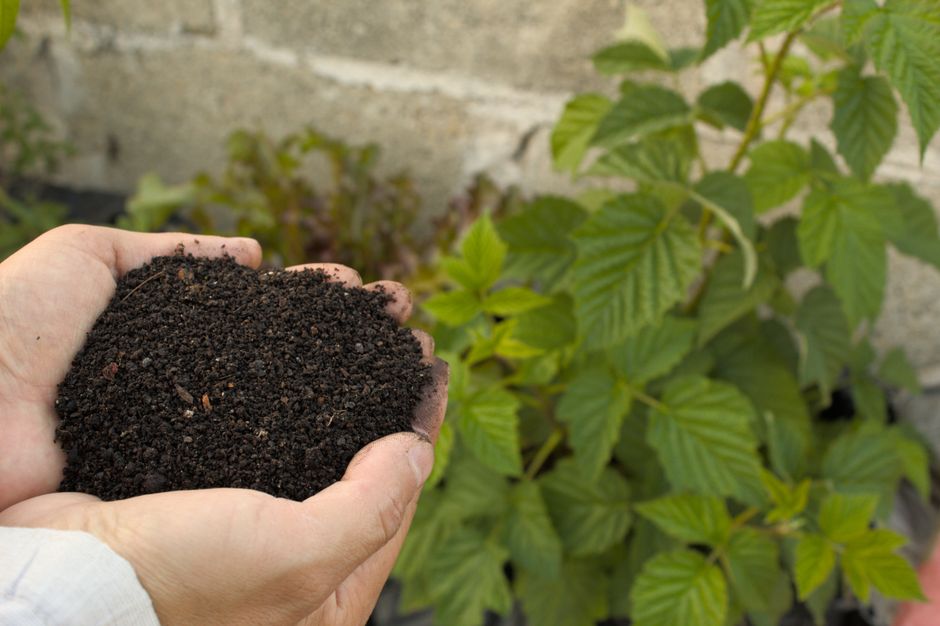 A mature living soil bed is an ecosystem, not a medium.
How the plant actually gets fed
In a bottle-fed system, nutrients arrive as ready-made mineral salts the roots take up immediately. Fast, precise, and entirely dependent on you nailing the dose every time.
Living soil works the other way. Microbes break down the organic matter and minerals in the bed, convert them into forms the plant can use, and release them gradually as the plant calls for them. Mycorrhizal fungi go further, partnering with the roots and sending out thread-like hyphae that can reach 15 to 20 inches beyond where the roots themselves stop, dramatically expanding the volume of soil a single plant can draw from. Research on inoculated crops has measured nutrient uptake rising by 50 to 100% compared to uninoculated roots working alone. In exchange, the plant trades sugars it makes through photosynthesis for that extra reach. The plant ends up steering its own feeding through chemical signals to the microbes around its roots. Slower and less precise than bottles, and that is the point: it takes what it needs, when it needs it, instead of being force-fed a fixed chart. If the fungal network never gets the chance to establish, none of that extra reach materializes, which is exactly why a freshly mixed bed underperforms compared to one that has run a few cycles.
Why top growers made the switch
- Terpene expression. Many growers are convinced the balanced nutrition of a living system pulls out a deeper, fuller terpene profile. For anyone chasing loud, nuanced aromas, that alone is the argument. (For why those aromas matter, see the science of why gas strains smell like fuel.)
- Forgiveness. A mature bed buffers itself. It is far harder to nutrient-burn or lock out a plant in living soil than in a tightly dosed bottle regime, because the system regulates availability instead of dumping everything at once.
- Less work over time. Once a bed is established, feeding often comes down to water and the occasional top-dress or compost tea. No daily measuring, no pH chasing.
- Cost. Reusing and improving the same soil for years cuts the steady waste of bottle after bottle. One head-to-head comparison of amendment costs against a leading organic bottled line found living soil running at roughly £7.94 per plant against £16.59 for the bottled equivalent, well under half the price once you strip out the marketing on the bottle. In 2026, with input costs where they are, that math matters.
What it asks in return
Living soil is not effortless, it front-loads the effort. Building a good bed takes knowledge, quality ingredients, and patience while the biology establishes. A brand-new mix is not at its best; it needs time to come alive.
You also give up the instant control of bottles. You cannot fix a problem by dumping a corrective dose at noon, because you are managing a slow ecosystem, not a chemistry set. That trade, precision for resilience, is exactly what its devotees value, but it is a real shift in mindset. One thing it does not replace is a careful finish, so skip the flush mythology and respect the dry and cure instead.
Genetics still come first
For all its strengths, living soil is an environment, not a miracle. It can help great genetics reach their potential, coaxing out deeper aroma and healthier growth. It cannot turn an ordinary plant into a loud one, and nobody serious claims otherwise, because a soil food web amplifies whatever genetic ceiling the seed already carries rather than raising it. Start with great seeds, give them living soil, and you stack the deck for a louder, cleaner result.
None of this means bottles are dead. A grower running a single tent on a tight schedule may still get more consistent, faster results from a dialed-in bottled program than from a bed that needs a season to mature. Living soil rewards patience and repetition, not a single quick cycle. What has shifted is the ceiling: at the top end of the scene, where growers chase the last few percentage points of terpene expression, the bottles increasingly look like the compromise, not the gold standard.