The Strain-Name Arms Race: What 'Everything Is Gas' Says About Cannabis Culture
Every dispensary menu now reads like a hype contest. The way we name weed has become its own folk language, and it reveals more about the culture than the flower in the jar.
Walk into any dispensary and read the menu like it is a novel. Runtz, Gelato, Zkittlez, Apple Fritter, then a wall of strains with "Gas," "Fuel," "OG," and "Cake" bolted onto everything. Somewhere in there is a Super Boof and a Gary Payton. The names have become a genre of their own, and the genre is loud, fast, and competitive. It is worth asking what that says about the culture that produced it.
From description to hype
There was a time when strain names were rough descriptions. Northern Lights told you something about its glow and origin. Skunk told you exactly what you were about to smell. Sour Diesel was a promise about the nose, sharp and fuel-forward, and it delivered. Names were shorthand for an experience.
Somewhere along the way the name stopped describing the flower and started selling it. "Gas" is the clearest case. Once it meant a specific pungent, fuel-like terpene profile descending from a lineage that traces back more than 30 years, to a single bag of bagseed that seeded Chemdog and went on to parent most of the loud strains of the following 25 years, including the OG line, the kind of funk I unpack over in how the cannabis world fell in love with fuel genetics. Now it is shorthand for "this is strong and desirable," stamped on plants that may carry none of that original pungency. The word migrated from a description to a hype tag, and the menu followed.
Why the names exploded
Three forces pushed this:
- Shelves create competition. Legalization put dozens of flowers side by side on a single menu, sometimes 50 or more options deep, and a boring name dies on a crowded shelf while a flashy one gets picked up. Leafly's own strain database alone now catalogues over 5,000 named varieties, and that count only grows every season.
- Social media rewards the screenshot. A name like Super Boof spreads faster than any careful description ever could, because it is built to be repeated.
- Hype became a currency. A name that sounds rare and exclusive can move grams at a premium even when the genetics underneath are ordinary.
The result is an arms race. Every drop needs a name louder and gassier than the last, because the floor for "exciting" keeps rising. A trending name can burn through its novelty in a matter of weeks on social media, which is exactly why shops keep hunting for the next one instead of building a name that lasts years.
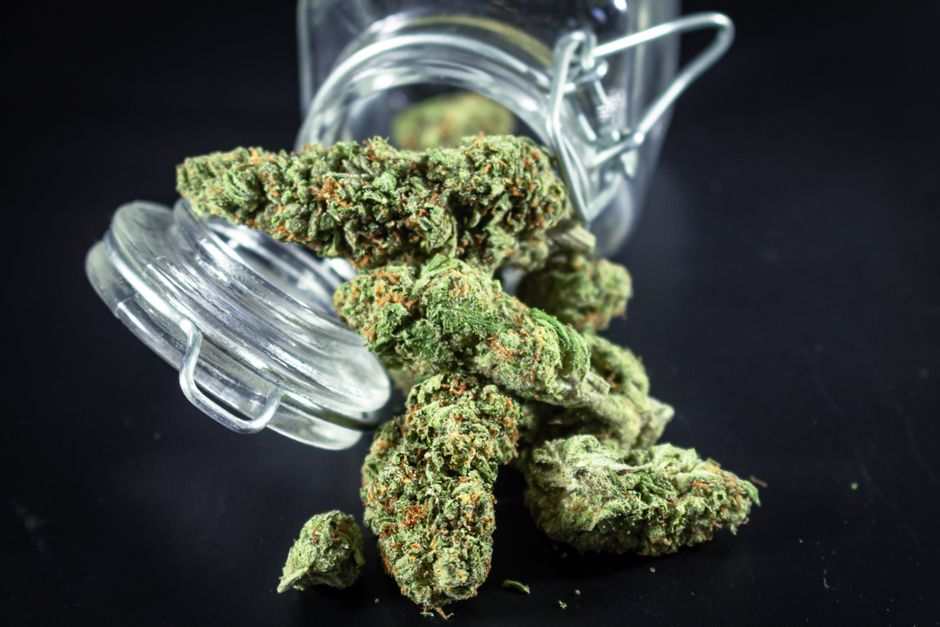 The menu reads like a hype contest, because that is what it has become.
What gets lost, and what does not
The casualty is information. When every strain is "gas" and "fire" and "exotic," the words stop telling you anything useful, in much the same way a 2023 lab analysis of 23 flower samples from 10 Colorado dispensaries found that about 70% tested more than 15% below the THC potency printed on the label, with three samples testing at barely 50% of what the packaging claimed. A name can no longer be trusted to predict a smell, a structure, or an effect. Two completely different plants can wear nearly identical hype names, and the same plant can carry three different names across three shops chasing the same trend.
There is a transparency problem buried in that. Hype names travel without lineage. A flashy name lets a seller skip the boring, honest part, which parents, which cut, which breeder. The name does the marketing so the genetics never have to. That is the same sleight of hand behind "pure landrace" labels with no provenance: an exotic word standing in for a documented chain.
The aroma used to come first and the name second. The arms race flips that order. The name leads, and the flower is left to catch up to a promise it never made.
It is not all loss, though, and it would be snobbish to pretend otherwise. The naming culture is creative, funny, and communal. It is folk language built bottom-up by growers and smokers, not a corporation. A great name is a small piece of art, and the best of them stick because they capture something real about a cut. Knowing your Runtz from your Zkittlez is a shared vocabulary too, an inside language that connects people across cities. That is worth something.
How to read a menu in this era
Enjoy the names, but do not let them choose for you. A few habits that hold up:
- Treat the name as marketing and the lineage as truth. If a budtender cannot name the actual parents on request, that gap tells you something the label never will.
- Trust your nose over the noun on the label. The funk either announces itself or it does not, and your nose is the tool that built this culture.
- Notice when a shop renames a flower to ride a trend, and notice which growers keep their names honest and consistent over years.
Those last ones are usually the people who care about the genetics underneath, not just the sticker on the jar.
The strain-name arms race is a mirror. It shows a culture that is creative, competitive, hungry for status, and a little drunk on its own hype. That is not a tragedy. The smartest move is to love the language and still read past it, to the genetics that actually tell you what you are about to smoke.